

Customers want the convenience of digital lending without giving up the flexibility of human support. The challenge is making both feel connected.
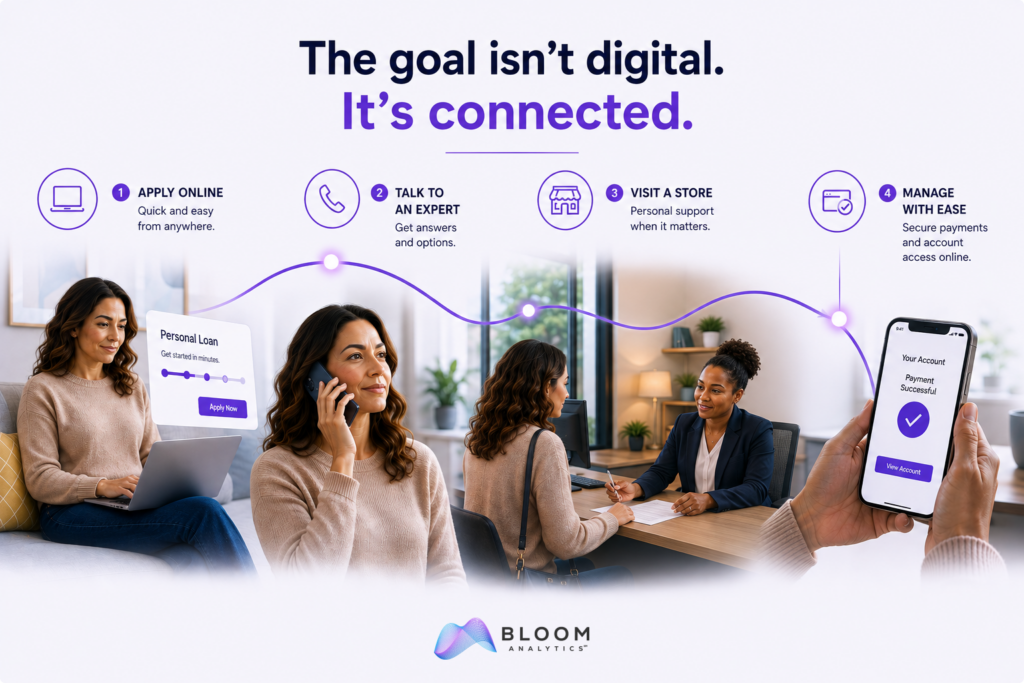
A customer starts a loan application online on Tuesday night. On Wednesday morning, they call with a question. On Friday, they stop by a storefront to complete part of the process. A month later, they log in online to make a payment.
To the customer, this all feels like a single relationship. To the lender, it may involve multiple systems, workflows, teams, and technologies.
And that’s where many storefront-to-online transformations become more complicated than expected.
You see, the goal of digital transformation isn’t to move customers online.
It’s to make it easier for customers to do business with you.
Sometimes that happens online. Sometimes it happens in a storefront. Sometimes it happens across both.
The challenge is that customers expect those experiences to feel connected, even when the systems supporting them are not.
The Challenge Hidden Inside Existing Systems
Many storefront lenders already have technology platforms that support their existing operations.
Those systems often work well for branch-based lending.
But online lending introduces new expectations.
Customers may want to view all of their accounts in one place. They may expect visibility into applications that were started but not completed. They may expect online payments, digital communications, and self-service options.
Supporting those experiences often requires careful consideration of how systems interact with one another.
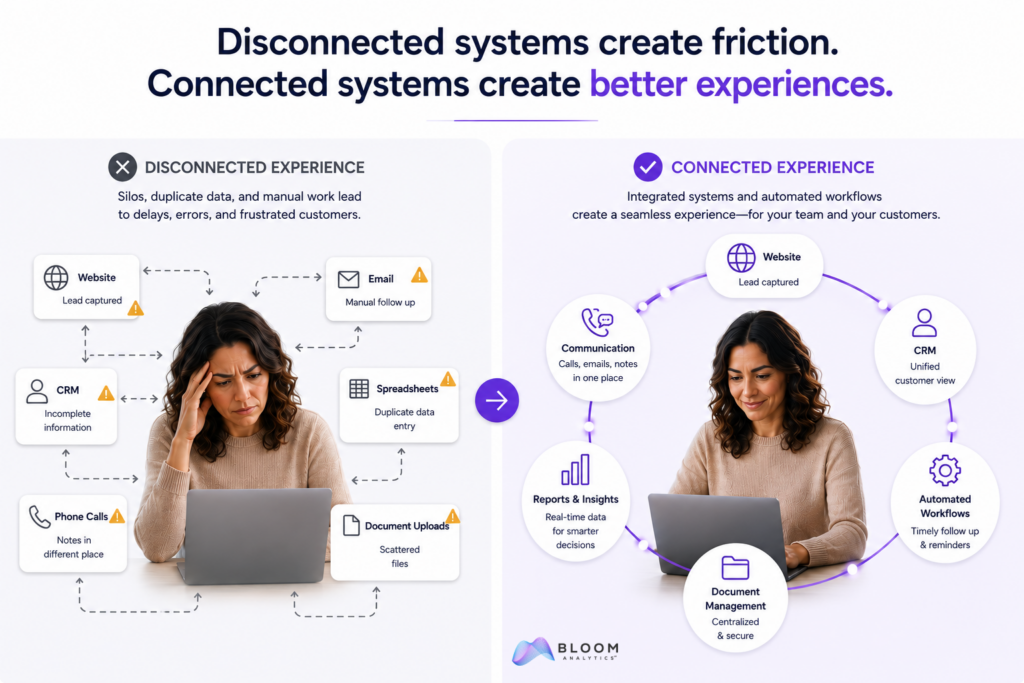
Because if information lives in multiple places, customers can end up experiencing the business as disconnected even when the organization sees itself as unified.
Small Frictions Become Big Problems
In a storefront environment, employees can often bridge gaps manually.
If information is missing, they can look it up. If a process is unclear, they can explain it. If a customer has a question, they can often resolve it on the spot.
Online, those same gaps become much more visible.
A customer may start an application online, only to discover that a storefront employee can’t see their progress. A customer may call support expecting an update, but the representative may not have access to the same information displayed in the customer portal. A customer may begin a process in one channel and find they have to start over when they switch to another.
None of these challenges seem significant in isolation. But together, they can have a meaningful impact on conversion, customer satisfaction, and long-term retention.
That’s why operational design becomes increasingly important as lending programs expand online. Because the goal isn’t simply to offer more ways to engage. It’s to ensure those experiences work together in a way that feels seamless to the customer.
That doesn’t mean every process has to be identical.
It means customers shouldn’t have to think about how your organization is structured in order to do business with you.
The Goal Isn’t Digital. It’s Connected.
Successful storefront-to-online transitions aren’t just about adding new technology.
They’re about creating experiences that feel connected regardless of how customers choose to engage.
That often requires organizations to think carefully about:
-
-
-
- System integrations
- Customer visibility across channels
- Operational workflows
- Support experiences
- Data consistency
-
-
The goal isn’t simply to launch an online lending program. It’s to ensure customers can move seamlessly between online and offline experiences without friction.
Because customers don’t distinguish between your channels.
They only experience your brand.
Planning a Storefront-to-Online Transition?
Bloom Analytics helps lenders evaluate customer experience design, operational workflows, system integration strategies, and the broader considerations that support successful digital lending programs.
Whether you’re introducing a new online product, bringing an existing offering online, or creating a more connected experience across channels, our team can help you navigate the transition with confidence.
Schedule a strategy call to start the conversation.
Bloom Analytics provides analytics, consulting, and technology solutions designed to support lending operations. Lending decisions, underwriting criteria, and compliance obligations remain the responsibility of the lender.